Category: Uncategorized

  • Why the creative personality must create or die

    Why the creative personality must create or die

    I came across a nugget of information on a very dark day that changed everything. To be honest this information should have been very obvious to me considering my own experiences and my background in Psychology. Suffice to say part of me did know but I thought they were just flights of fancy on my end. So what the hell was this information?

    People with highly creative personalities have no choice but to create.Dr Jordan Peterson

    To not create is to die a slow spiritual death. It takes a massive toll on your being as a creative individual to not practice your art or your craft. But often a lot of us who are not earning directly from our craft sometimes sideline it to the detriment of our well-being.

    You will note that I used the word ‘personality’ earlier on, and that’s because creativity is as much a result of personality as it is the environment. In other words, it’s encoded in your DNA because personality is widely believed to have a biological basis.

    (PS: I will be leaving links to detailed, but easy to understand articles on this topic for you to sink your teeth into. Psychology is very broad and sometimes complex or confusing therefore I will point you in the right direction.)

    What is personality?

    A simple, easy to understand definition is: Personality refers to individual differences in characteristic patterns of thinking, feeling and behaving (apa.org). Personality encompasses all the traits, characteristics, and behaviours that set you apart from everyone else.

    This is of course the simple definition. Once you dive into the world of research psychology it becomes much more complex. For today that explanation will suffice. Creative individuals usually share a particular core personality trait that makes them who they are. That trait is openness, one of the Big Five.

    The five-factor personality theory

    The five-factor personality theory, also commonly known as the Big Five theory is a widely accepted framework used to describe and test the human personality. There are many theories on personality, but the Big Five is the most widely agreed upon in the field of Psychology.

    It breaks personality into 5 core traits that are universal, namely; openness, conscientiousness, extraversion (also spelt extroversion), agreeableness and neuroticism. For the sake of this discussion, we’ll only touch on openness. You can read this article on the subject for more information on the other traits. It’s easy to understand and well laid out.
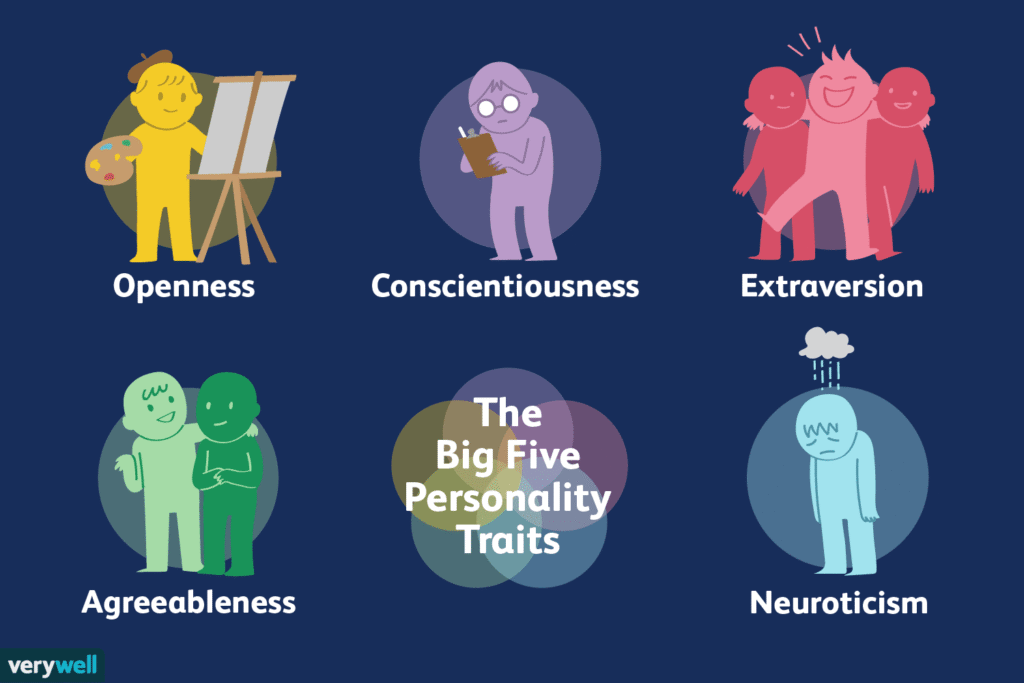
    Image credit: verywellmind.com

    It’s necessary to point out that these traits happen on a spectrum between two extremes. Imagine a line graph from one to 100 as the spectrum, and people will fall anywhere between those values. So basically everyone has these traits but within a range from high to low. Creative personalities are often high in openness.

    Openness and the creative personality

    So, what is openness?

    In short – the tendency to be intellectually curious and use imagination.

    People high in this tend to be creative, adventurous, have many interests, love learning and new experiences. They often think outside the box, crave novelty, enjoy the arts and engage in creative careers or hobbies. Now, do you see why most creative people share this same personality trait?

    Despite having studied Psychology, I never applied this knowledge to myself. This was unusual for me because I’m very self-aware and do a lot of introspection. I partly blame the lack of insight on my former dislike for the subject, the module on Personality was one of my least favourites. I digress. My point is when you are high in openness as a creative person, not engaging in your art means going against your biology. It will leave you miserable. I learnt this the hard way when I gave up creative writing for financial freedom.

    So why do we stop creating?

    There are many reasons creative people ignore that aspect of their personality once they become adults. One of the most common though is money. Following a creative endeavour simply doesn’t pay the bills for a lot of people. Monetizing that passion is extremely difficult and the market for your endeavours might not be lucrative. There is a myriad of other, often traditional careers that will almost guarantee you a steady income and more often than not, a creative career isn’t one of them.

    For those of us that do have successful creative careers, it’s a long and slow process and we shouldn’t expect overnight success. Most of us will give up on these in favour of more stable jobs, but that’s still okay. What matters is you create regardless of whether that earns you an income or not.

    So what happens when you don’t create?

    Misery, sadness, a feeling of incompleteness. I can only speak from my own experience here and tell you how that was like for me. I felt as if I was suffocating slowly, with this widening emptiness I couldn’t fill. Whenever I create I experience this buzz of energy, I feel alive. When I live through long spans of time without creating anything, I feel this bone-deep sadness that I cannot shake. I ask myself what the point of life is, I start to have mental breakdowns. This is not melodrama, when I said I made my discovery during a dark time, I wasn’t exaggerating.

    So how can we always ensure that we create? How do we keep that creative personality from withering inside?

    How to have your cake and eat it

    Well there are many routes, but these three are the most obvious:

    • Attempt to establish a creative career that fully supports you financially. I’ll admit, this is pretty difficult for most people but if you have very few financial responsibilities and the time, give it a shot.
    • Get a creative job for your 9-5. The creative industry is booming with the need for copywriters, designers (web, graphic, UX etc), illustrators and so many more. The list is very long. This might work for you, satisfying the need to create, but often you might not control the artistic vision or direction which might drive you crazy. Your own little hobby will still be necessary.
    • Getting a relatively undemanding 9-5 and becoming a serious hobbyist for your craft. This I would say is the best alternative. By undemanding job, I mean the kind of job that doesn’t require you to work crazy hours or leaves you feeling mentally and emotionally drained. That leaves you time and energy to invest quite seriously in your hobby. Purchase the tools you need, dedicate time for it, create and share your work. Do this to feed your spirit, keep it alive and help it thrive.

    So there you have it – why not creating leaves you feeling miserable and what to do about it. As for myself, I’m still trying to find my way but I have learnt my lesson, never stop creating. This post is part of my participation in the Afrobloggers #WinterABC blogging challenge.

    For further readings on personality and the Big Five, PositivePsychology.com has the perfect article for you, follow that link to read it. It will give you more background on personality, a brief history and interesting cases that happened in the field. It’s detailed but easy to follow and won’t drown you in too much information.

  • A present to my creative self – the WinterABC

    A present to my creative self – the WinterABC

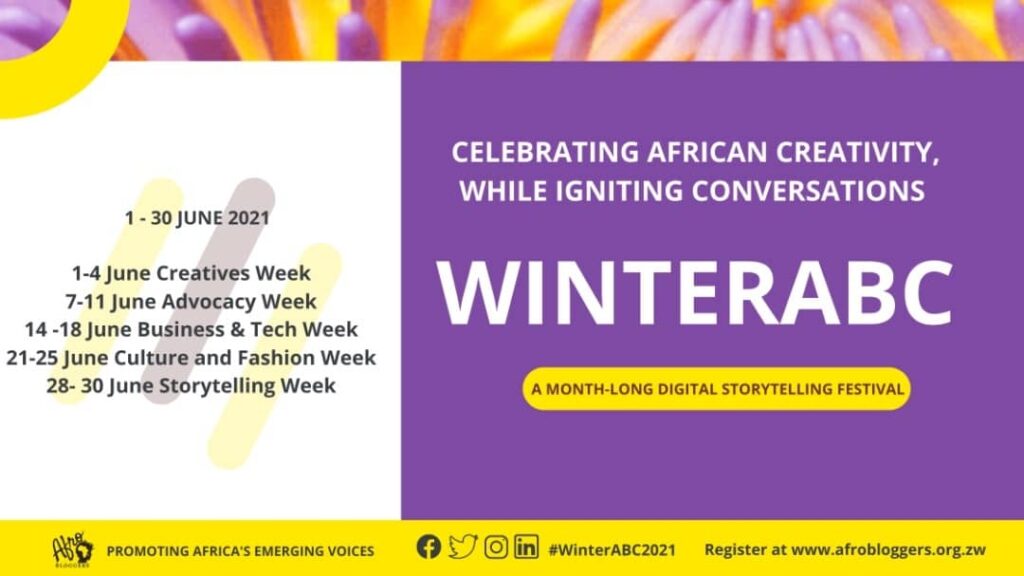
    I almost never take part in blogging challenges, except in 2020 when I attempted the winter challenge but never finished it. I am determined, this time around. The challenge is flexible with themed weeks instead of daily topics, and the community is even bigger and better. On this day I dedicate my first post for the challenge to Yvonne the creative personality (i.e me) who has been side-lined and neglected for the past year. This is for the piece of me that has been dying a slow death and taking me with it because I would not let it flourish.

    And this my dear readers is the said challenge

     I chose to fully pursue my financial independence and freedom with a 9-5 job. I paid a price for it. Go ahead and read: What I learnt sacrificing creative writing for financial security, and you’ll see precisely what I mean. It has taken me a few years of job-hopping to realize that I don’t have a choice but to create. I don’t have the luxury to ignore and not nurture that aspect of my personality, as dominant as it is. No highly creative person can do that without damaging themselves, ask Dr Jordan Peterson. This challenge is my way of finding that path again. It’s an apology to my ravaged soul, a boon to my bored mind and a tendril of hope to my creative spirit.

    I dedicate this challenge to my neglected blog. I treated you badly, and I’m sorry; with all that you’ve done for me you deserved better. My blog and I – we wanted to conquer the world. We set out to make our mark in the blogging world (and secure paid work for me), but I betrayed her. I turned away and thought she wasn’t important anymore, caught up in the new career path I was pursuing. Most importantly though I lost my ‘why‘, I forgot why I created her and started blogging in the first place. But I am home now.

    I’m excited about this new chapter, this journey and what it means for us. By us, I mean the broken, creative soul inside of me, my blog and myself. We all deserve the love, excitement and fulfilment that comes from creating. I’m eager to read what others bloggers will serve us. Above all, I hope that someone finds answers and inspiration in the stories I’ll share. Of course, winning the prize money wouldn’t hurt either.

  • What I learnt sacrificing creative writing for financial security

    What I learnt sacrificing creative writing for financial security

    I would love to say I have always loved writing, but the truth is I’m not sure it’s been “always.” I’ve had an inclination towards writing for as long as I can remember. Maybe it was because I fell in love with stories from an early age, earlier than my adult memory can remember. That’s the thing about things you’ve had a knack for at a young age, they become engrained in your identity because you can remember those things always being part of your life. Novels, writing, dancing, drawing…creativity. Somewhere along the road things changed.

    I learnt that creative writing isn’t a sensible career, it doesn’t pay, never mind dancing, what kind of a career would that be, especially in a developing country? But, I was stubborn. I read too many books not to know that it’s smarter to do what you’re good at if you want to succeed, and I was, still am good at writing. So, I comprised. I decided to lean on non-fiction writing to build a career, thus began the blogging phase of my life.

    I call it a phase because, before this post (written sometime during my inconsistent stage), I don’t remember the last time I wrote on my blog or anyone else’s blog. I set out to build a portfolio for my writing, gain clients, make money and share my writing. And I did that, I became a professional writer. Until I decided to venture into Communications and join the NGO sector, and I did (it wasn’t as simple and straightforward as I’m making it sound). Securing a steady job, with a decent income, doing what I’m pretty good at was exactly what I wanted…except something died along the way.

    I can’t draw to save my life anymore, that’s a skill that dies when it goes unnurtured. As a child, I used to fill my mother’s work diaries with 3D drawings of cars, that was my main obsession. I haven’t danced in over 6 years, and I’m not talking about dancing at a party, in a club, or family gathering. I’m talking about practised, choreographed dancing…the deliberate movement of limbs to convey a message. And now, now that I have the job, the apartment, and the security I craved, I struggle to write. The stories that used to rush through my head at a wild speed sometimes only plod through reluctantly once in a while.

    Of all the things to die, the stories where the last ones to go. I’m afraid that one day, maybe a decade from now, I’ll look back and remember a time when I could weave magnificent fictional stories in my head. Just like with ‘drawing’, I’ll wonder how I could have been artistic enough to pull it off, and I’ll shake my head with sadness that I let that die too. It makes me sad and empty that I’m running down a path that’s taking me away from the things that bring me life.

    So many of us young people label ourselves as “creatives” and it’s a title with connotations. We’re not the really rich ones, no, we’re the ones who spend all our time doing cool, fun stuff (or so the perception goes) for a living. We get to do what we love. We create magnificent stuff and the level of creativity you have determines how ‘cool’ or valuable your work is. Two years ago, I was firmly entrenched in advertising, and I hated it. As a Copywriter, you’re hired for your creative prowess, but I hated it. It wasn’t the dream job that I thought it would be. I started to question if I was truly as creative as I liked to think I was.

    It went downhill from then on. Long story short I decided maybe creativity wasn’t my thing after all. And so I stopped. I became paralysed with indecision, doubt, apathy and the desire to still acquire the material things I wanted, which my job allowed me to do. And then I began to feel empty. Uninterested in doing the very things that inspired me, excited me and bring that glint into my eyes. I felt that part of me start to fade and die, and I knew something was wrong. That is the day I realized that I AM a creative spirit, and without fulfilling that part, the work part of my life becomes dull and desolate.

    READ: If you want to be more creative. get bored

    I sacrificed that side of me for the job that lets me have the financial independence I badly craved. I ask myself if it’s worth it, but attempting to make a viable career out of those things is a mammoth task that requires energy that my job constantly burns out of me. Here’s where creatives make a gross error, working an 8-5 that demands the same from you that your creative endeavours do. It’s obviously easier to clinch a job based on what you excel at, but sometimes it takes everything away too. It leaves your cup empty.

    Was there a lesson in here somewhere? A purpose in writing this? A takeaway for you? I don’t know. What I do know is oftentimes we let life derail us completely until everything we do is about survival (which is necessary) or worse we live for the weekend. Not everything we do has to bring us money, although living in a failed state requires we try everything to earn an extra buck. It’s okay to spend time and energy focusing on things purely for enjoyment, or to help others, or to make a difference, without earning money or fame as the end goal. It’s important not to let everything go because your mental wellbeing will suffer.

    Important aspects of ourselves die, and we won’t see it until years have passed and we look back and ask ourselves how we became the people we are. We ask ourselves what happened to all the fire and light, and wonder where the deep-seated dissatisfaction we have with our own lives came from. It’s an unsettling and regrettable feeling. At the moment I work (my job at the time of writing) so I can live (my lifestyle) but for the kind of person I am, that is problematic. It occurred to me that I need to change things, to figure out a way around it, or else continue my descend into complete apathy, an emotion or lack of that leads to suicide in ‘at risk’ individuals.

    I hope you find or build your fire, and keep it burning. Until next time. 

    (PS: I wrote this several months from the date of publication. I had a chance to pursue more creative endeavours full-time but it hasn’t been easy. I’ve learnt that perhaps one has to find a way to strike the perfect balance.)

  • You can have your dream job and still be miserable

    You can have your dream job and still be miserable

    Imagine you studied Computer Science for four years, specialized in Software Engineering, and graduated with a merit. I would have said distinction, but let’s just say you also had a swinging social life too. Immediately after, you start job hunting. Your CV looks terrific; you were your university Tennis team captain, the Secretary for the Student Representative Council and you even contributed a column to your university magazine. (This is also partly why you didn’t have a First Class degree; you were a busy body).

    You decide that your dream job is to work for Microsoft (Afrika) because that’s every Software Engineer’s dream (I really don’t know, so let’s just say). Anyways, instead, you spend one year unemployed, desperately searching for a job. Even though you did a pretty cool degree, you still live in a shitty economy and life is just generally unfair. As time passes your mental health starts to spiral. You ask yourself how long this will go on? If you’ll ever get a job and a banging career. You ask yourself how long you’ll have to ask for money from your parents to go anywhere and do anything.

    Eventually, you start a “side-hustle” importing sneakers from China and selling them because asking for money every single month to prepare for the one week you bleed out, every single month, sucks. (Yeah, I just made you female because women have that pesky expense they can never run away from, and it’s pretty expensive when you’re broke). It’s humiliating to have to do that as a grown woman, even with your own parents. (Or you can insert whatever unavoidable, biological mechanism the male population has that absolutely demands sanitary ware that women don’t contend with). So, moving on…you’re selling these shoes, but business is slow, and besides, you WANT TO BE A SOFTWARE ENGINEER, not a seller of sneakers (this requires skill in sales and I have all the respect for these business people!)

    One day, something sticks. After a dozen interviews, a full year after graduation, you get a job offer. It’s not at Microsoft, it’s entry level and the salary isn’t something to brag about, but it’s a job, and you’re happy. It came around just in the nick of time because your mental state had progressively worsened. You didn’t want to bump into any of your peers (pre-pandemic) because of that dreadful question, “So what are you doing these days?” You also started to despise family gatherings for the same reason, everyone wants to know if you have a job yet.

    All of that, plus your own inner criticism was starting to make you feel a little worthless, and you were starting to question the point of life. This is generally not a good place to be, and once this starts to happen, or even before, you need to seek help and reach out to someone. Often when we’re drowning in our own pain and misery, we forget that we’re not alone. There are people who love us, and will hold our hands. We’re also not the first or the only ones to go through such an experience, and speaking to someone who’s been there, helps. You’ll often realize that troubles are not unique.

    Back to our story. So, you have this new job, and you’re excited to finally start making some headway. Okay, pause. I could really just go on with your story but we’re going to cut the long story short using a remote control. Fast forward three years later, through sheer determination, social intelligence, hard work and luck, you’ve landed a job at Microsoft. Congratulations! You didn’t really like your old job, (in fact sometimes you despised it) but you were grateful for the income and liked not being broke all the time. Plus, you knew you needed it to help you get into Microsoft, so you bore it, and your strategy worked. You’re there and you can’t wait to kill it.

    But there’s something you didn’t anticipate, because three months after starting your new job, things start to go sideways. You can’t put your finger on it exactly but you know that something is wrong. Those debilitating emotions you had to contend with in your year of unemployment except they’re different and harder to deal with because now you can’t justify them. You were unsatisfied with your life for the past three years, but bore it in pursuit of your dream. You have what you want, your dream job, so why are you miserable? To your absolute horror, you realize something you had stubbornly ignored in your pursuit for a glowing career as a Software Engineer at Microsoft…you hate software engineering, or is Microsoft you hate working for?

    This is where things get extremely messy, because you spent the past three years pinning the Microsoft logo to your dream board, visualizing yourself there and now that you’re there, you have this ugly realization. To make matters worse, you moved out of your parents’ house, and now you’re renting out this place you really like. You’re even thinking about getting a car and you’ve saved up for it. Now if you just hated your job and it didn’t affect your mental health, you may have been able to simply go on. But you’re not that person. You’re the kind of person who likes being excited by your work and want meaning and purpose you can identify with.

    And those debilitating emotions we spoke about? They are back with a vengeance. You’re frustrated with yourself for not loving this great thing you have, a well-paying position at a world-class company. Who would hate that? You would, and you hate yourself for not loving it because it’s illogical not to. Every morning, you fight yourself to get to work, to wake up and sit at your work station. You have to force yourself to do every little task, and that takes a lot of energy. You feel terrorized by your bosses even though really they’re just demanding that you do what they hired you for. As time passes, and you’re forcing matters, you start having meltdowns in the privacy of your apartment.

    READ: Why I quit my job, and why you shouldn’t

    Pause. At this point, you should be seeking help because it only gets worse from here. When you live with constant tension, eventually something has to give, and if you don’t do something soon enough, that something will be you. There’s no happy ending for your family here if you’re the one who buckles. Typically, the only way out seems like death, but it’s really not. It feels like it, but trust me, it’s not. There are other really uncomfortable options, but that’s the thing, they’re only uncomfortable for a short while and then it gets better.

    Back to our story. You’re in a shitty position and feel trapped and don’t know what to do. Before we dive into several ways this could go, the point of that entire story is to highlight that mental health is a tricky thing. Sometimes it doesn’t matter what your life circumstances are like, you could be miserable and develop a mental illness. Environmental factors have a huge impact on our mental well-being but so do internal factors. In our story as a Software Engineer at Microsoft, you can’t justify your depressive symptoms but that doesn’t mean they’re not valid. So often we think that if we’re in a position society deems as favourable, then we can’t experience mental health problems because of it.

    You can’t hate working a high-powered job, at a prestigious organization, getting paid really good money because that is the dream. But you can. You can, and it is the people in these situations who are at really great risk because nobody expects it, therefore no one is watching for it. And people can’t speak out because of fear of judgement. The worst part maybe isn’t the judgement, it’s knowing that the advice you’re going to get is, “Hang in there and learn to cope because you have a terrific job and terrific jobs are hard to get.” So you bottle it up until it eventually consumes you. How many suicides do you hear of people with apparently enviable lives? It might not have been hating their job but there was problem that most people would not consider a problem and it went unaddressed and undetected.

    Depression, anxiety, suicide…all of those can happen to anyone regardless of their circumstances in life. It’s imperative that we all know and accept that. This isn’t what I had planned to write about, it just kind of took a life of its own, therefore here we are. If you’re struggling mentally, emotionally, reach out to people. If you know someone who is, check on them, be there for them, just listen and show them some love. You can’t heal anyone, but you can help them along the way by showing them that they’re not alone.

    We’re going to end our little chat here. As for the Software Engineer’s story, we’ll continue it another day. Once the post is up, I’ll update this one and put the link here. FYI, I’ve been in that Engineer’s shoes, and I’ll tell you all about how you can have your dream job, only to hate it, and why that sometimes happens.

    Until next time! For now, please share this with anyone who might find it helpful or useful.