Tag: mental health

  • You can have your dream job and still be miserable

    You can have your dream job and still be miserable

    Imagine you studied Computer Science for four years, specialized in Software Engineering, and graduated with a merit. I would have said distinction, but let’s just say you also had a swinging social life too. Immediately after, you start job hunting. Your CV looks terrific; you were your university Tennis team captain, the Secretary for the Student Representative Council and you even contributed a column to your university magazine. (This is also partly why you didn’t have a First Class degree; you were a busy body).

    You decide that your dream job is to work for Microsoft (Afrika) because that’s every Software Engineer’s dream (I really don’t know, so let’s just say). Anyways, instead, you spend one year unemployed, desperately searching for a job. Even though you did a pretty cool degree, you still live in a shitty economy and life is just generally unfair. As time passes your mental health starts to spiral. You ask yourself how long this will go on? If you’ll ever get a job and a banging career. You ask yourself how long you’ll have to ask for money from your parents to go anywhere and do anything.

    Eventually, you start a “side-hustle” importing sneakers from China and selling them because asking for money every single month to prepare for the one week you bleed out, every single month, sucks. (Yeah, I just made you female because women have that pesky expense they can never run away from, and it’s pretty expensive when you’re broke). It’s humiliating to have to do that as a grown woman, even with your own parents. (Or you can insert whatever unavoidable, biological mechanism the male population has that absolutely demands sanitary ware that women don’t contend with). So, moving on…you’re selling these shoes, but business is slow, and besides, you WANT TO BE A SOFTWARE ENGINEER, not a seller of sneakers (this requires skill in sales and I have all the respect for these business people!)

    One day, something sticks. After a dozen interviews, a full year after graduation, you get a job offer. It’s not at Microsoft, it’s entry level and the salary isn’t something to brag about, but it’s a job, and you’re happy. It came around just in the nick of time because your mental state had progressively worsened. You didn’t want to bump into any of your peers (pre-pandemic) because of that dreadful question, “So what are you doing these days?” You also started to despise family gatherings for the same reason, everyone wants to know if you have a job yet.

    All of that, plus your own inner criticism was starting to make you feel a little worthless, and you were starting to question the point of life. This is generally not a good place to be, and once this starts to happen, or even before, you need to seek help and reach out to someone. Often when we’re drowning in our own pain and misery, we forget that we’re not alone. There are people who love us, and will hold our hands. We’re also not the first or the only ones to go through such an experience, and speaking to someone who’s been there, helps. You’ll often realize that troubles are not unique.

    Back to our story. So, you have this new job, and you’re excited to finally start making some headway. Okay, pause. I could really just go on with your story but we’re going to cut the long story short using a remote control. Fast forward three years later, through sheer determination, social intelligence, hard work and luck, you’ve landed a job at Microsoft. Congratulations! You didn’t really like your old job, (in fact sometimes you despised it) but you were grateful for the income and liked not being broke all the time. Plus, you knew you needed it to help you get into Microsoft, so you bore it, and your strategy worked. You’re there and you can’t wait to kill it.

    But there’s something you didn’t anticipate, because three months after starting your new job, things start to go sideways. You can’t put your finger on it exactly but you know that something is wrong. Those debilitating emotions you had to contend with in your year of unemployment except they’re different and harder to deal with because now you can’t justify them. You were unsatisfied with your life for the past three years, but bore it in pursuit of your dream. You have what you want, your dream job, so why are you miserable? To your absolute horror, you realize something you had stubbornly ignored in your pursuit for a glowing career as a Software Engineer at Microsoft…you hate software engineering, or is Microsoft you hate working for?

    This is where things get extremely messy, because you spent the past three years pinning the Microsoft logo to your dream board, visualizing yourself there and now that you’re there, you have this ugly realization. To make matters worse, you moved out of your parents’ house, and now you’re renting out this place you really like. You’re even thinking about getting a car and you’ve saved up for it. Now if you just hated your job and it didn’t affect your mental health, you may have been able to simply go on. But you’re not that person. You’re the kind of person who likes being excited by your work and want meaning and purpose you can identify with.

    And those debilitating emotions we spoke about? They are back with a vengeance. You’re frustrated with yourself for not loving this great thing you have, a well-paying position at a world-class company. Who would hate that? You would, and you hate yourself for not loving it because it’s illogical not to. Every morning, you fight yourself to get to work, to wake up and sit at your work station. You have to force yourself to do every little task, and that takes a lot of energy. You feel terrorized by your bosses even though really they’re just demanding that you do what they hired you for. As time passes, and you’re forcing matters, you start having meltdowns in the privacy of your apartment.

    READ: Why I quit my job, and why you shouldn’t

    Pause. At this point, you should be seeking help because it only gets worse from here. When you live with constant tension, eventually something has to give, and if you don’t do something soon enough, that something will be you. There’s no happy ending for your family here if you’re the one who buckles. Typically, the only way out seems like death, but it’s really not. It feels like it, but trust me, it’s not. There are other really uncomfortable options, but that’s the thing, they’re only uncomfortable for a short while and then it gets better.

    Back to our story. You’re in a shitty position and feel trapped and don’t know what to do. Before we dive into several ways this could go, the point of that entire story is to highlight that mental health is a tricky thing. Sometimes it doesn’t matter what your life circumstances are like, you could be miserable and develop a mental illness. Environmental factors have a huge impact on our mental well-being but so do internal factors. In our story as a Software Engineer at Microsoft, you can’t justify your depressive symptoms but that doesn’t mean they’re not valid. So often we think that if we’re in a position society deems as favourable, then we can’t experience mental health problems because of it.

    You can’t hate working a high-powered job, at a prestigious organization, getting paid really good money because that is the dream. But you can. You can, and it is the people in these situations who are at really great risk because nobody expects it, therefore no one is watching for it. And people can’t speak out because of fear of judgement. The worst part maybe isn’t the judgement, it’s knowing that the advice you’re going to get is, “Hang in there and learn to cope because you have a terrific job and terrific jobs are hard to get.” So you bottle it up until it eventually consumes you. How many suicides do you hear of people with apparently enviable lives? It might not have been hating their job but there was problem that most people would not consider a problem and it went unaddressed and undetected.

    Depression, anxiety, suicide…all of those can happen to anyone regardless of their circumstances in life. It’s imperative that we all know and accept that. This isn’t what I had planned to write about, it just kind of took a life of its own, therefore here we are. If you’re struggling mentally, emotionally, reach out to people. If you know someone who is, check on them, be there for them, just listen and show them some love. You can’t heal anyone, but you can help them along the way by showing them that they’re not alone.

    We’re going to end our little chat here. As for the Software Engineer’s story, we’ll continue it another day. Once the post is up, I’ll update this one and put the link here. FYI, I’ve been in that Engineer’s shoes, and I’ll tell you all about how you can have your dream job, only to hate it, and why that sometimes happens.

    Until next time! For now, please share this with anyone who might find it helpful or useful.
  • Virus-anxiety: How I finally wrote my first ebook

    Virus-anxiety: How I finally wrote my first ebook

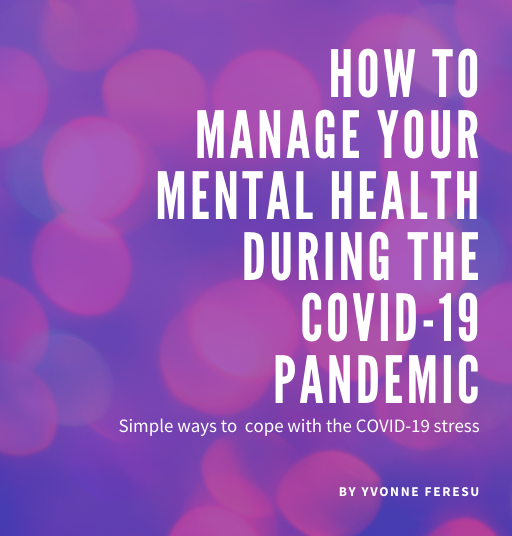
    I wrote my first e-book, finally! And it’s on mental health.

    This was no easy task! It showed me new levels of frustration, and I acquired a profound respect for cover and book designers. I seriously underestimated the editing and proofreading process. Editors deserve more money than they charge honestly, and I deserve a bottle of wine for my frustration bearing abilities.

    PS: In writing this e-book, I’m also smashing a resolution I made at the beginning of the year, promises I made myself.

    READ: My 2020 challenge – promises to myself.

    What’s the e-book about?

    Managing your mental health during a pandemic. When COVID-19 was first reported in Zimbabwe, up until the first fatality, my anxiety started running high. It was all anyone spoke about; at the office, at home, in public transport, on social media. I spent too much time keeping myself updated on every little piece of that was released onto the media. I was going crazy, and I was definitely overdoing it. Of course, when I started imagining everyone I knew who fit within the more ‘vulnerable groups’ inside a coffin, I realized I was taking it too far.

    That’s when I decided to make a conscious effort to protect my mental health. Coincidentally a group I’m part of (1k Challenge) put up an e-book writing competition. I didn’t enter the competition, but I did write an e-book, almost three times the length required by the competition. The directive was to write on something you know about, but that’s also useful to others. It occurred to me that perhaps I could document the actions I took to manage my fear about coronavirus. Hopefully, someone else would find it useful.

    Harder than it looks, but easier than I thought

    I have always toyed with the idea of writing a non-fiction e-book, but all my paltry attempts failed dismally…obviously. I wasn’t putting enough effort. I wasn’t being consistent, neither was showing any discipline. What I did terrifically was to dream about it, which I’ve always been good at. I knew writing a book would be difficult, every writer knows that (but most people don’t realize this). Writing a book is very challenging (I’m talking about 200-400 paged creations here). Writing a novel is an even more challenging endeavour.

    But …it’s easier than I imagined. Perhaps I underestimated my own abilities, but I wasn’t sure I could pull it off (despite working jobs that rely heavily on my writing skills). My e-book is only about 21 pages long, but I’m proud of it. It’s a good start and taught me quite a great deal about writing a manuscript. Without further ado, you can read or down it here.

    How I pulled it off

    • I wrote down all my major points in the numerical order they would appear in the e-book
    • Then I set a timeline (which I didn’t follow)
    • I collected my research
    • Came up with a distribution plan (which I’m loosely following)
    • Wrote first draft (I wrote about 500 words every day from 6.30-7am)
    • Edited and proofread (a ton of times, back and forth until I was ready to scream with frustration)
    • Designed my cover in Canva (I just edited a template, to be honest)
    • Put everything together in Google Docs and Smallpdf (this is the part that almost made me cry)
    • Published!
    • Then I saw more errors and had to take it down
    • More editing and proofreading and tears of frustration
    • Decided I didn’t want to anymore
    • More formatting and editing…then, published.

    Learning points

    Discipline is necessary. You have to be patient. It takes more time than you probably imagined. Frustration will have you aching to throw away your whole laptop. Try, try, and try again, until you’ve had it up to your neck.

    Did I mention patience? You need buckets of it, because a project like this, small as it is, will stretch your patience to breaking point.

    I can’t be more pleased about this, I really can’t explain to you how happy I am about my small victory. Poor Bae had to deal with my frustration also, but the encouragement went a long way to saving the e-book from the digital trashcan.

    PS: Share the e-book with anyone you think could really use it, or maybe even those who don’t know they could use it. He’s a link to it, again.

    https://bit.ly/how-to-manage-your-mental-health-during-the-COVID-19-pandemic-ebook

  • Dear graduates, it’s a bad idea to apply for and accept just any job, here’s why.

    Dear graduates, it’s a bad idea to apply for and accept just any job, here’s why.

    Times are tough for a lot of people; everyone can see that. The formal employment sector is in the pits, we all know that, however, dear fellow graduates, getting any kind of job is not necessarily a good thing. Hold on and let me explain, here’s a sample conversation I’ve heard before:

    *“Sha I need a job….”

    What kind of job do you want?” I ask.

    *“Chero! It doesn’t matter, I just need a job. Anything, as long as I’m getting paid.”

    I almost always hear that answer, and I’m torn between telling this person what I know or keeping my trap shut. Firstly, you don’t want just any job! Trust me, that is a road to psychological damage…yes, doing that sort of thing takes away from you even as you earn a few pennies. See, every time I tell someone that doing *“chero basa” (any kind of job) will take you down a dark path, I always hear, “It’s because you have a job, you don’t understand.”

    It’s called underemployment, and it sucks

    But I do understand. I wasn’t necessarily picky once too, and I managed to land a job whilst waiting to decide whether I wanted to go back to school immediately or not. I hated it. It required barely any intellectual effort on my part, neither did I do anything particularly stimulating.

    So there I was, with my Honours degree in Psychology, working behind a counter punching in codes all day long. I didn’t hate it because I thought I’m too good for that (although I was overqualified for it), I hated it because I could feel my mind dying a slow, desperate death from lack of use. And that also meant I’d wasted five years in school, A’level plus university. You can’t begin to imagine what this did to me.

    Which is precisely what will happen to you, if you’re not more selective about the kind of job you apply for and the working conditions. Now I understand a lot of us are in survival mode, reacting to a turbulent economy, but there are opportunities to generate income, as long as you’re willing to think, work, and make risky choices. Screw looking for conventional employment if it’s proving elusive, seek to generate income instead.

    If you prefer the “security” of someone else finding ways to make money, then give you a small cut for your time, then continue the “rese rese” job search. Almost every organisation needs employees (don’t listen to people who bash 9-5 jobs), but pick employment that enriches you. Beware that there is a price taking a job that several pegs below your capacity. It erodes your self-confidence and sometimes your sense of self-worth too. The way you think of yourself will change, and that affects everything you do, especially the small decisions with hidden, larger consequences.

    READ: Why I quit my job and why you shouldn’t. 

    Protect your mental well-being

    Alternatively, wait patiently until what you want comes along. Something that falls fairly within the parameters of your interests and skill level. Hustle for income in the meantime, but don’t settle for under employment. I remember crying tears of frustration over in an omnibus on my way home several times. It’s a dangerous route to take. Protect your mental well-being fiercely whenever you can.

    Consider that maybe you don’t need just any job, you just need any source of income.

    The translation

    *Sha – short (slang) for shamwari meaning friend

    *Chero – any

    *chero basa – any kind of job

    *rese rese – in this context it means whatever job you can get, any

  • Learning to be best friends with yourself and why it matters

    Learning to be best friends with yourself and why it matters

    I never fully understood the importance of being best friends with yourself until I had a meltdown in the middle of the night. I said a lot of unkind things to myself, a lot of thoughts that honestly shouldn’t see the light of day. The next day I woke up to the realization that I had changed. That I was no longer the self-assured woman who knew where she was going, how she was getting there, and why she was going there. The unwavering certainty of pursuing a goal eluded me, and so my sense of self-efficacy was taking near fatal blows.

    [Self-efficacy is an individual’s belief in their innate abilities to succeed in specific situations, achieve goals, or accomplish tasks. You can read a little more on self-efficacy to better understand it here.]

    The thing with self-efficacy is, it affects both your confidence and self-esteem. It’s tricky little situation. Anyways, upon this realization that I had changed, it also occurred to me that I never used to talk to myself quite this badly before. I was a believer, but even that was starting to elude me. I decided that morning that I needed to re-learn being best friends with myself.

    Here’s why being best friends with yourself rocks

    I don’t know about you, but my best friends and I generally don’t bash each other, at all. He can bash himself sometimes, but it’s my job to remind him what an awesome person he is. (For the sake of easy writing I’m going to refer to the said best friend as a guy, but you’re free to insert a different gender.) When he’s sad, I listen; when he needs to vent, I listen; when he’s happy, I listen; when he’s victorious, we celebrate.

    Point is, best friends support each other and always have each other’s backs. I’d never tell him he’s a loser, I wouldn’t even think it, so in the same vein I shouldn’t be telling it to myself. Do you ever tell your best friend, when he’s feeling like a failure, that he might as well not bother trying because there’s really no point at all? Do you tell him that he’ll always be in the same position no matter how hard he tries, because success just isn’t his thing? I don’t! I’m not a shitty friend, and if your friends say that to you, find new ones.

    When you are best friends with yourself, you can acknowledge your shortfalls without bashing yourself. You’ll cheer yourself on, because you believe in yourself, just like you believe in your best friend. You don’t believe the negative things he says about himself, so why do you believe it about yourself? In the cases where those things are true, then you help him become a better person.

    Most importantly best friends are kind to each other. They’re compassionate and forgiving. The best of friends are nice to one another, and treat each other with respect. And so that’s what I’ll do with myself, and maybe you should too.

    Why it matters

    Why does your best friend matter? When shit hits the ceiling, you could lose your sanity. Imagine you’re unemployed, or your small business isn’t turning a good profit, or you’re falling to secure clients; then hearing a consistent whisper in your head telling you how much you suck? Or how bad everything is and that it’s only going to get worse?

    There’s a mental load to constantly battling panic, fear, hopelessness and anxiety. It’s tiring, and leaves you emotionally drained. If things aren’t going very well for you, then the last thing you need is constant negativity in your head. You’re going to need all the love and support you need, so why not start it from within?

    So many things are beating at my mind I can’t afford to add to my own misery with self-bashing and a crippling permission. I’d rather put that energy towards being kinder to myself. That’s why it matters. That’s why it’s important to be treat yourself like your best friend.

    What being best friends with yourself means

    It means you’re more patient with yourself, with the pace of the progress you’re making. Being your own best friend entails practising tolerance with yourself and your flaws; it means forgiving yourself more for your fuck-ups. I learnt long ago to be as objective as possible about my skills and abilities, and I’m grateful that aspect hasn’t changed. Honesty is an essential part of a healthy relationship, and all of us should maintain that within ourselves.

    Moreover, for me, being best friends with myself means working towards my goals, but not putting too much pressure on myself. It means sparing myself the torture of comparison and yet using it to propel me forward. Most importantly it means loving myself more, and showing myself more kindness and tolerance.

    Now you try it. Befriend yourself, be kinder to yourself and see what happens. Share it with your friends so they can do it too.